Laughing and smiling faces are all we see as we make our way during the evening hours through the twisting streets of Seoul Korea to find our apartment. There seems to be a spirit of friendship and fun in the air. The hot sun has gone to rest for the night and with its departure comes the signal of a new evening of Korean friendship, fellowship, and comradery packing out the many Korean Barbecue restaurants in our area of the city. All is well with the world.
The morning comes quietly. No sound of busy traffic down the side streets, no whistling for taxies, no bustle of people pushing to get to work.
The country of South Korea is indeed a beautiful country inhabited by many wonderful people. It is home to a powerful and beautiful history, language, and culture, but this writing is not about all the amazing things that this country has to offer (and believe me it has a lot). This is really more about humanity and our struggle to grow within our cultures, communities, and ultimately, as a human race. Seoul, Korea seems surprisingly peaceful and tranquil but there is something sinister and evil hiding in plain sight.
Suicide.
That is the word that hit us over and over again as we begin to understand who Korea is as a culture. Death by one’s own hand. The loss of hope. A quick search on Google will offer various results such as, “Suicide No.1 cause of death for South Korean teens, youth.” According to this article alone, Suicide has been the number one killer of young people since 2007.
To put this into a personal perspective, these past few months we have been teaching English at the School for North Korean refugees here. We have the honor and blessing to teach one of the girls one-on-one. She is a very bright young girl. She has a sincere desire to learn, a cheerful attitude and a smile to go with it. Yet, as we have been walking with her, we asked her to write a story as part of an English class activity. Her story goes something like as follows.
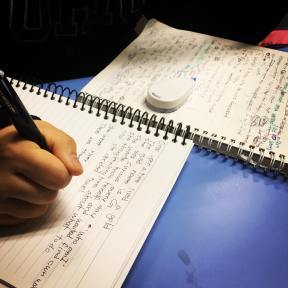 “Once upon a time there was a piece of gold. The gold’s name was G. She was curious every day to know who she was. She wanted to know herself and wanted to find her own worth. She thought for a long time about what to do and she decided to travel…”
This story concludes with G trying all the options possible to find her own value but after being unable to find it ends up killing herself.
We can’t say we weren’t shocked and didn’t know how to react to the story. It is not that simple to just move on with the English class without taking to the heart the possibility that the girl may be telling a story about her own feelings. Her own desire to find her own worth.
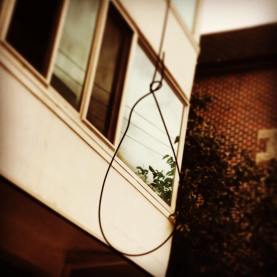 This past week, as we walked back from one of these English lessons, we found a powerline hanging in front of our building. We would never have noticed it if wasn’t for the fact that someone decided to turn the powerline into a noose. It was a dark message of the unspoken pain that people are silently going through.
The questions that run through my mind are “WHY? Where is this pain coming from? How to help when the pain happens in silence?”
After the Korean war everyone began to compete with one another in many areas including job, appearance, knowledge, status, honor, and possessions. This competition made neighbors and fellow Koreans adversaries as families sought to support their family by staying relevant in a booming and ever more aggressive economy.
This mentality has been handed down through the generations as children and great-grandchildren have now been expected to “raise the bar” and be better, look better, and go “higher” than everyone else. The pressures that these standards bring has reached impossible and unachievable levels leaving the youth of this country knowing that they are inadequate. There are all kinds of surgeries available to these people and because of the social pressure, you can find someone on any given day walking around post-surgery with bandages on their face and bruised eyes. We have been told, by a person of Korean descent who understands both cultures, that the stress that these young adults have to go through is “200 times that of young people from the west.”
This culture here is a culture of respect. It was very deep roots in Confucianism and with it a child is always expected to adhere to the decisions and opinions of the father (or person in authority). Often this hierarchical mentality isolates children from parents and husbands from wives because people cannot communicate freely. This isolation combined with the high standards leads to depression and loneliness.
Every day, while we travel to teach English, we see nearly everyone on the public transportation with their earbuds in watching videos, listening to music, playing games or scrolling social media. No contact with the world around them. No human interaction whatsoever. After watching this for a number of days I began to bring back the question, “WHY?” yet again.
Here is where my mind went.
Korea is, from all I can understand, a high context culture. What does this mean? This means that they are not direct in addressing issues and problems that they see in a person or situation (this might be more directly relevant in the hierarchical relationships that I mentioned earlier). They tend to go instead to friends and others that they know who are of the same age and talk with them about the situation. Which makes the problem travel around instead of having it sorted out directly. Despite what you just read there also seem to be areas in which people are very vocal and direct concerning each others shortcomings. Whether spoken or not people in this culture are very critical of each other in all aspects of their life, body image, education, productiveness and the unwritten standards that society has over them.
I believe that the high context of this culture makes people unsure of who they can trust. They are unsure of where they can speak and not have information be used against them later…so they choose to remain quiet. Isolation brings comfort as well as loneliness. Thus the buses and metros riddled with headphone isolated people and ultimately adds (yet again) to the high suicide rates.
I want to specifically say, again, that I am not saying any of this to point fingers at the country of Korea. They are an honorable people with pride for who they are and a passion for the future, but like all cultures, countries, and communities of people, they have issues that must be healed. There are serious wounds in the foundation of this great country that must be addressed. The death of the individuals (both in spirit and body) ultimately ends in the death of a country.
Honestly, it is hard to look at another culture without evaluating your own. The thought that returns repeatedly is, “Do we see this happening in the United States?” I would say, Yes and no. Does it look the same? In many ways, it does not. We do not (for the most part) have unbearably high expectations over our children. We do not have a system, such as Confucianism, that keeps individuals from verbalizing how they feel or what they want. I would say that we are the opposite, we actually lack respect and value for one another. We have run too far, as the United States, in the other direction. Leaving respect for one’s elders and each other behind. We have become a society dominated by only one opinion and that is the opinion of oneself. That being said I believe the symptoms are playing out similarly to that of Korea as we now are seeing a spike in the suicides of our young people, an increase in school shootings, drug use, violence, and… isolation.
There are many factors but if I were to name one culprit for the majority of these problems it would be the lack of family. This goes for Korea, the U.S.A, and the rest of the world. Our families are hurting. We do not know how to raise and love our children. For the sake of families and humanity we must fix that.
 Care. Equip. Share.